Ivy Tech Community College isn’t chasing Ivy League prestige—but it doesn’t need to. For students across Indiana looking to launch careers quickly and affordably, Ivy Tech delivers exactly what matters: accessible, hands-on degree programs aligned with real workforce needs. With over 70 degree options spanning healthcare, technology, manufacturing, and business, Ivy Tech has quietly become one of the most effective pipelines into skilled employment in the Midwest.
This isn’t a school built for academic theory or four-year degree padding. It’s built for welders, nurses, IT support specialists, and logistics coordinators—people who want training that leads directly to a paycheck. If you're evaluating Ivy Tech College degrees, you're likely prioritizing ROI, flexibility, and job readiness over campus life or prestige. That’s exactly where Ivy Tech excels.
Let’s break down what makes their degree offerings stand out, which programs deliver the strongest outcomes, and how to choose the right path based on your goals.
Why Ivy Tech Degrees Make Sense for Indiana Residents
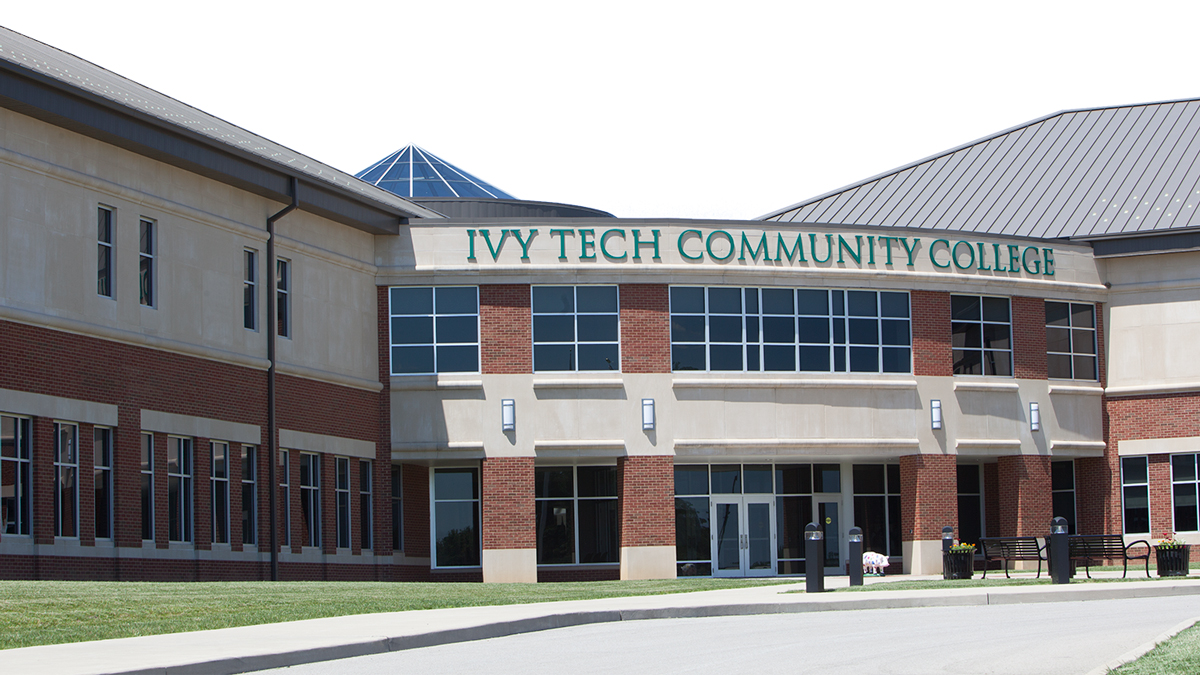
Ivy Tech operates 40+ campuses across Indiana, making it the largest singly accredited community college system in the U.S. Its scale isn’t just about size—it’s about alignment. The college works closely with local employers, trade groups, and state workforce boards to shape curriculum that responds to regional job demand.
For example, in Evansville and Fort Wayne, advanced manufacturing and automation programs have expanded due to partnerships with companies like Toyota and GE Aviation. In Indianapolis, nursing and medical coding programs have grown rapidly to address healthcare staffing gaps. This localized approach ensures that graduates aren’t just certified—they’re employable.
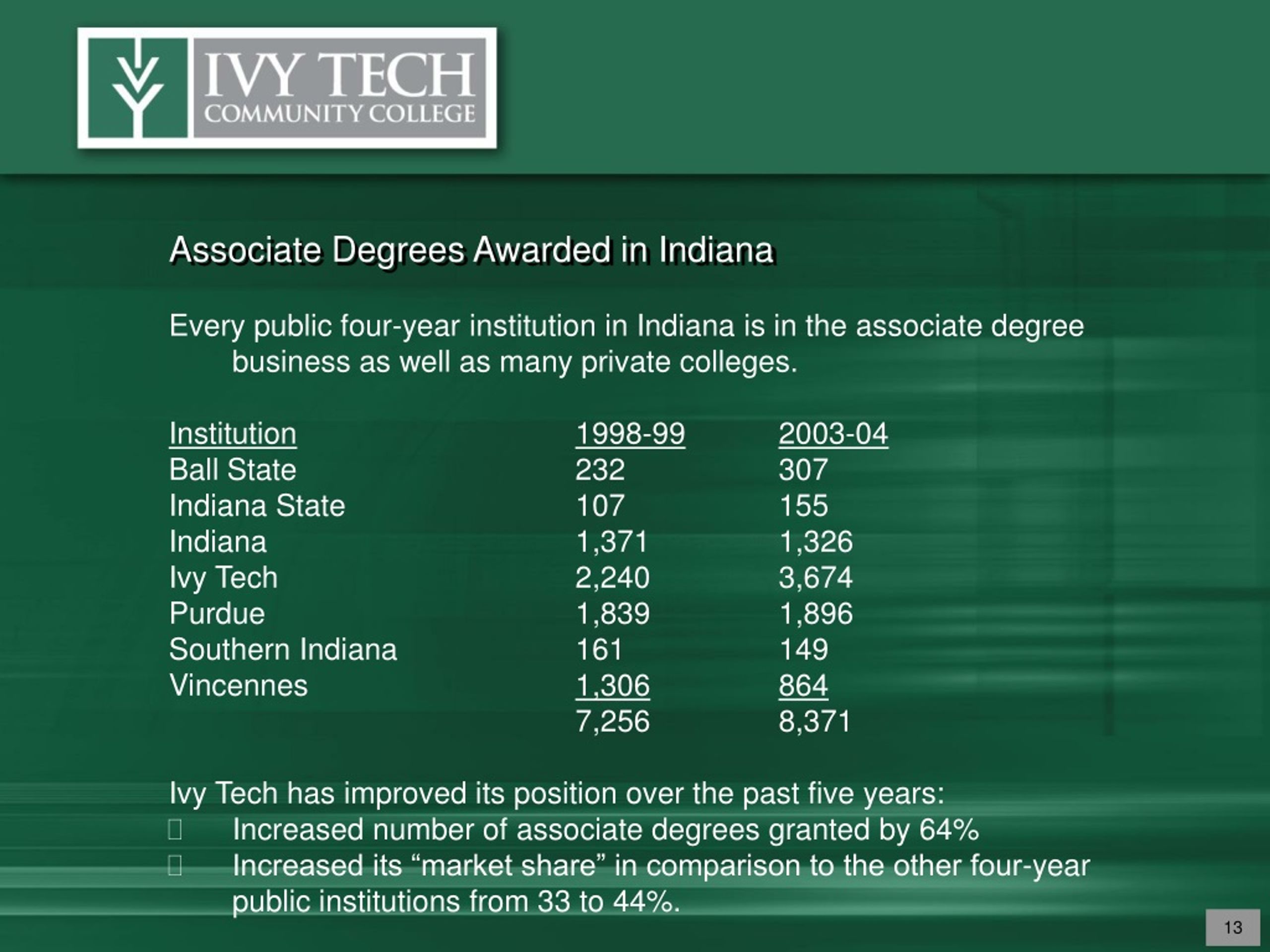
Affordability is another driver. Annual tuition at Ivy Tech runs around $4,300 for in-state students—less than half the cost of most public four-year schools. When combined with Indiana’s last-dollar scholarship programs like the Twenty-First Century Scholars, many students pay nothing out of pocket.
But affordability means little without outcomes. According to Ivy Tech’s 2023 graduate report, 78% of associate degree holders were employed within six months of graduation, with median starting salaries between $38,000 and $52,000 depending on field.
Top In-Demand Ivy Tech Degree Programs
Not all degrees are created equal at a community college. The strongest programs at Ivy Tech are those with clear career pathways, strong employer partnerships, and certification integration. Here are the most impactful:
#### Nursing (ADN) The Associate Degree in Nursing is Ivy Tech’s flagship program. Graduates qualify to take the NCLEX-RN and work as registered nurses. Clinical rotations are embedded in the curriculum, with placements at hospitals like IU Health and Community Health Network. - Realistic timeline: 2 years full-time - Common pitfall: Limited enrollment caps mean applicants should complete prerequisites early - Bonus value: Graduates can bridge to a BSN through partner universities like Purdue or Indiana State
#### Cybersecurity and Information Assurance With digital threats rising, this program trains students in network defense, ethical hacking, and risk management. It’s certified by the National Security Agency (NSA) and aligns with CompTIA Security+ and CISSP prep. - Workforce edge: Many students land internships with Indiana-based tech firms before graduation - Flexibility: Offered fully online with hands-on labs via virtual environments

#### Electrical Technology (Automation & Control) This degree prepares students for roles in industrial maintenance, PLC programming, and robotics. Coursework includes motor controls, programmable logic controllers, and industrial safety. - Industry pull: Companies like Subaru and Rolls-Royce recruit directly from this program - Hands-on training: Labs simulate real factory environments using Allen-Bradley systems
#### Radiologic Technology Accredited by the Joint Review Committee on Education in Radiologic Technology (JRCERT), this program trains students to perform X-rays and diagnostic imaging. - Clinical requirement: 1,200+ supervised clinical hours included - Licensing path: Graduates are eligible for the ARRT certification exam
#### Business Administration (with specializations) While broader than technical programs, this degree gains value when paired with a focus like supply chain management or digital marketing. - Transfer advantage: Designed to articulate into four-year programs at IUPUI or Butler - Real use case: A student in South Bend used this pathway to move from retail work to a logistics coordinator role at Amazon
How Ivy Tech Degrees Fit into Long-Term Career Growth
One misconception about community college degrees is that they’re dead ends. At Ivy Tech, they’re often stepping stones—especially through articulation agreements.
For example, an Engineering Technology graduate can transfer up to 60 credits toward a Bachelor of Science in Engineering at Purdue Polytechnic. Similarly, an IT graduate can move into a bachelor’s in computer science at Indiana University–Purdue University Indianapolis (IUPUI) with junior status.
But not everyone needs a four-year degree. In fields like HVAC, welding, or medical assisting, the associate degree or certificate is the terminal credential—and it pays well. A journeyman HVAC technician in Indianapolis earns a median $58,000, often without student debt.
The key is understanding your field’s ceiling. Ask: - Does this career typically require a bachelor’s later? - Are promotions tied to certifications or experience instead? - Can I earn while I learn through apprenticeships or co-ops?
Ivy Tech’s career advisors help students map these paths—something many four-year colleges fail to do.
Online and Hybrid Degree Options at Ivy Tech
Ivy Tech has invested heavily in online learning, especially post-2020. Over 30 degrees are available fully online, including: - Business Administration - Cybersecurity - Early Childhood Education - Medical Coding - IT Support
These aren’t watered-down versions. The online IT Support program, for instance, uses virtual labs to simulate real troubleshooting scenarios. Students diagnose network outages, configure firewalls, and manage user accounts in a sandboxed environment.
Hybrid programs—like Nursing and Radiologic Technology—combine online lectures with in-person clinicals. This model balances flexibility with hands-on rigor.
Pro tip: Check the modality code when enrolling. “HYBR” means hybrid, “ONLN” is fully online. Some programs labeled “ONLN” still require campus visits for exams or labs.
Certificate vs. Associate Degree: What’s the Right Choice?
Ivy Tech offers both short-term certificates (6–12 months) and two-year associate degrees. The right choice depends on your time, budget, and career target.
| Option | Duration | Median Starting Pay | Best For |
|---|---|---|---|
| Medical Coding Certificate | 10 months | $42,000 | Quick entry into healthcare admin |
| Associate in Applied Science (AAS) – IT | 2 years | $50,000 | Career advancement and transfer options |
| Electrical Lineworker Certificate | 12 months | $55,000+ | High-paying field with union pathways |
| Associate of Science (AS) – Pre-Engineering | 2 years | $60,000+ (after B.S.) | Students planning to transfer |
Certificates win when you need a job fast. Degrees offer broader knowledge, higher earning ceilings, and better transfer potential.
Common mistake: Choosing a certificate in a field that’s oversaturated—like general office administration—without a niche skill. Pairing a certificate with a certification (e.g., CompTIA A+ with an IT Support cert) boosts employability.
Realistic Challenges and Limitations
Ivy Tech isn’t perfect. Students should go in with eyes open.
Admissions bottlenecks exist in high-demand programs. Nursing, for example, accepts only about 30–40% of qualified applicants per term. Solution: Apply early, maintain a strong GPA in prerequisites, and consider starting in a related field like Health Sciences.
Limited campus resources compared to four-year schools. You won’t find large research labs or big-name professors. But you will find instructors with industry experience—many are working professionals who teach part-time.
Self-direction matters. Ivy Tech gives you access, but success depends on proactivity. Students who wait for guidance often fall behind. Those who use academic advising, career services, and tutoring early stay on track.
How to Choose the Right Ivy Tech Degree for You
- Start with three questions:
- What jobs are growing in my region? Use Indiana’s Career Explorer tool to see local demand.
- Can I commit 15–20 hours per week to coursework? Even online programs require steady effort.
- Do I want to transfer later or enter the workforce immediately? This shapes whether you pursue an AAS, AS, or certificate.
Then, follow this checklist: - [ ] Visit the program page and review the curriculum map - [ ] Attend a virtual info session or campus tour - [ ] Talk to an advisor and ask about job placement rates - [ ] Check if the program includes certifications (e.g., OSHA, CompTIA, NCLEX prep) - [ ] Confirm credit transfer policies if you plan to pursue a bachelor’s
Example: A student in Lafayette wanted to switch from restaurant work to tech. After researching, they chose the Cybersecurity certificate plus CompTIA Security+ training. Within 14 months, they landed a SOC analyst role at a regional bank.
Final Verdict: Are Ivy Tech College Degrees Worth It? For students focused on career entry, upskilling, or affordable transfer pathways, Ivy Tech degrees are not just worth it—they’re strategic. They deliver practical training, strong regional recognition, and alignment with Indiana’s labor market.
The strongest returns come from programs tightly linked to certified or licensed roles: healthcare, skilled trades, IT, and advanced manufacturing. These fields don’t care about your college’s ranking—they care if you can perform.
If you’re in Indiana and want to build a stable career without six-figure debt, Ivy Tech should be on your shortlist. It’s not glamorous. But it works.
FAQ Can I transfer an Ivy Tech associate degree to a four-year university? Yes. Ivy Tech has articulation agreements with over 30 Indiana colleges, including Purdue, IUPUI, and Indiana State.
Are Ivy Tech online degrees respected by employers? Yes, especially in technical fields. Employers in Indiana recognize Ivy Tech’s industry-aligned training.
How long does it take to complete an associate degree at Ivy Tech? Most programs take two years full-time, but many students attend part-time and complete in 2.5 to 3 years.
What financial aid options are available? Students can access federal aid, Indiana’s FSSG grant, and the Twenty-First Century Scholars program.
Do Ivy Tech degrees include certifications? Many do—examples include CompTIA A+, Cisco CCNA, OSHA 30, and NCLEX-RN prep embedded in coursework.
Is housing available at Ivy Tech campuses? Most campuses don’t offer dorms. Students typically commute or arrange private housing.
Can I work while earning an Ivy Tech degree? Yes. Most programs are designed for working adults, with evening, weekend, and online course options.
FAQ
What should you look for in Ivy Tech College Degrees for Career-Focused Students? Focus on relevance, practical value, and how well the solution matches real user intent.
Is Ivy Tech College Degrees for Career-Focused Students suitable for beginners? That depends on the workflow, but a clear step-by-step approach usually makes it easier to start.
How do you compare options around Ivy Tech College Degrees for Career-Focused Students? Compare features, trust signals, limitations, pricing, and ease of implementation.
What mistakes should you avoid? Avoid generic choices, weak validation, and decisions based only on marketing claims.
What is the next best step? Shortlist the most relevant options, validate them quickly, and refine from real-world results.


:max_bytes(150000):strip_icc():focal(728x275:730x277)/princess-catherine-prince-william-donald-trump-king-charles-iii-trump-state-visit-uk-windsor-091725-8672599a27214b6f8ffdbb07fd7596e4.jpg)